Pupils’ learning
Questions for the tutor, available guided practice, quizzes and materials for review.
Knowlee uses artificial intelligence (AI) to prepare answers and explanations. Guided practice and quizzes can support pupils in grades 4–8 of Polish primary school as they learn and review. We talk with schools about limited testing with an agreed scope, access arrangements and data-protection rules.
Questions for the tutor, available guided practice, quizzes and materials for review.
The agreed scope may include class and staff organisation, timetables, and projects with teams and communication between participants.
Availability and permissions depend on the scope of testing.
The March pilot helped us gather feedback from pupils. Since then, we have continued developing the app and introducing improvements.
In selected responses from the pilot, pupils described:
A summary of selected feedback from pupils, March 2026. The feedback concerns the version tested at that time. In the first week 136 students completed the survey, and 71 completed the final one.
Another Knowlee pilot is underway at a different Polish primary school, involving pupils in grades 7 and 8.
As of .
Discuss testing at your schoolAn English-learning example: from choosing a subject to material the pupil can revisit.
The pupil opens a subject available to them. In this example, they choose English.
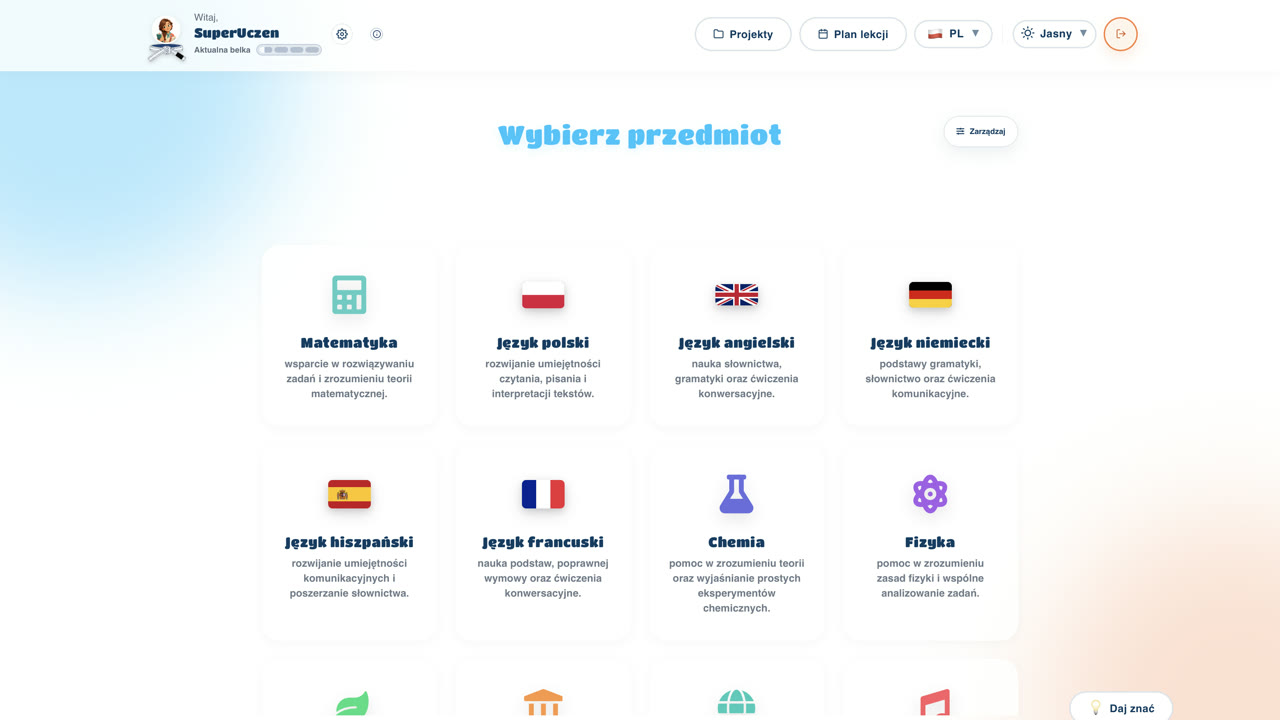
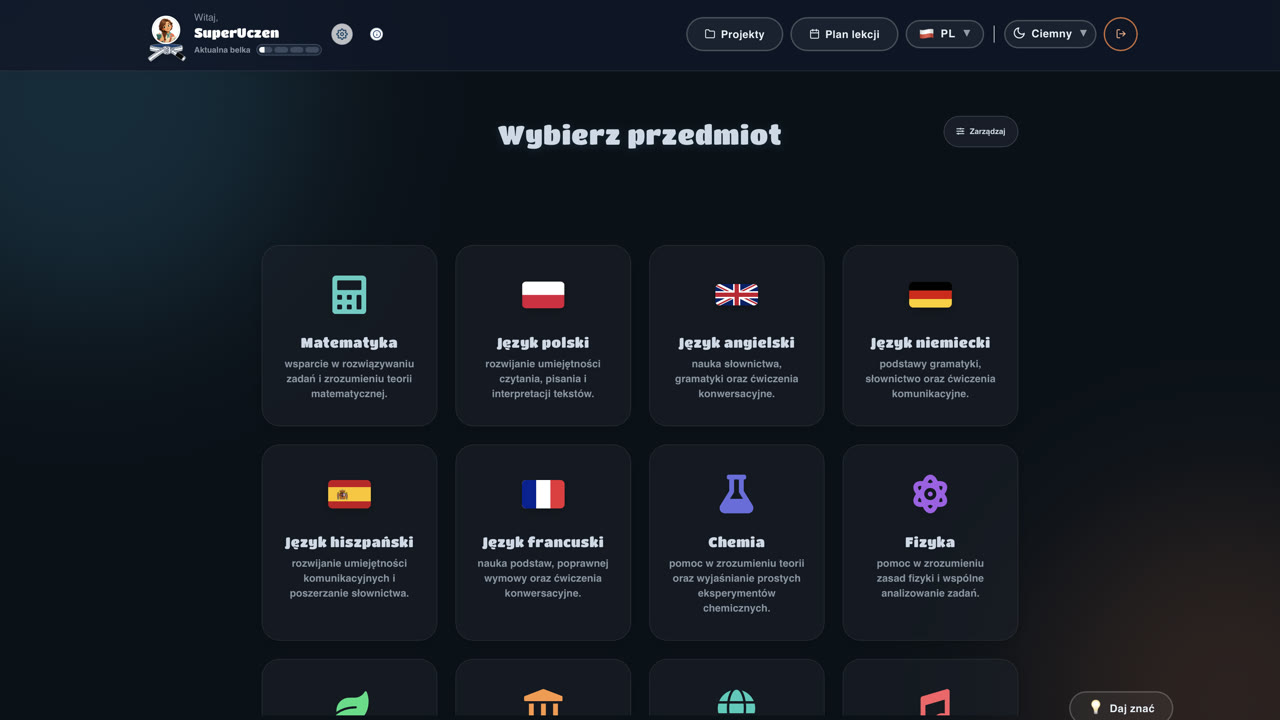
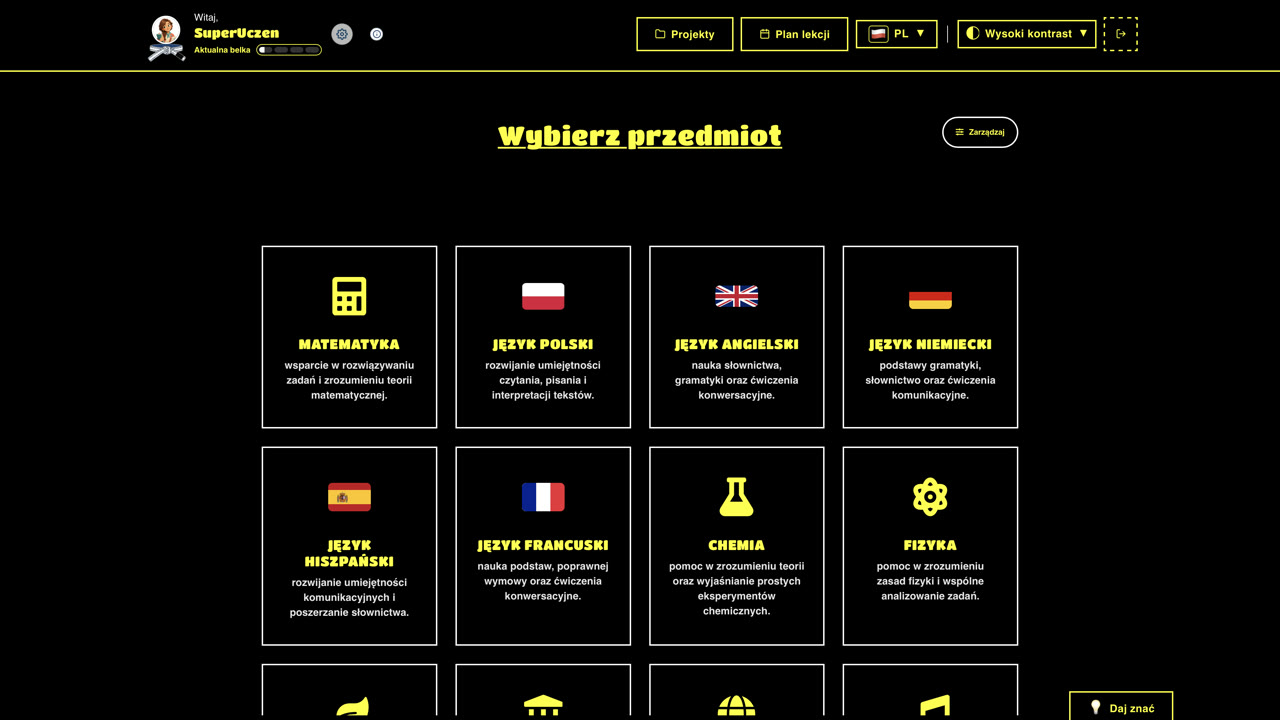
They ask Knowlee their own question, for example about the difference between must, should, can and may. They can ask a follow-up question or request an example.
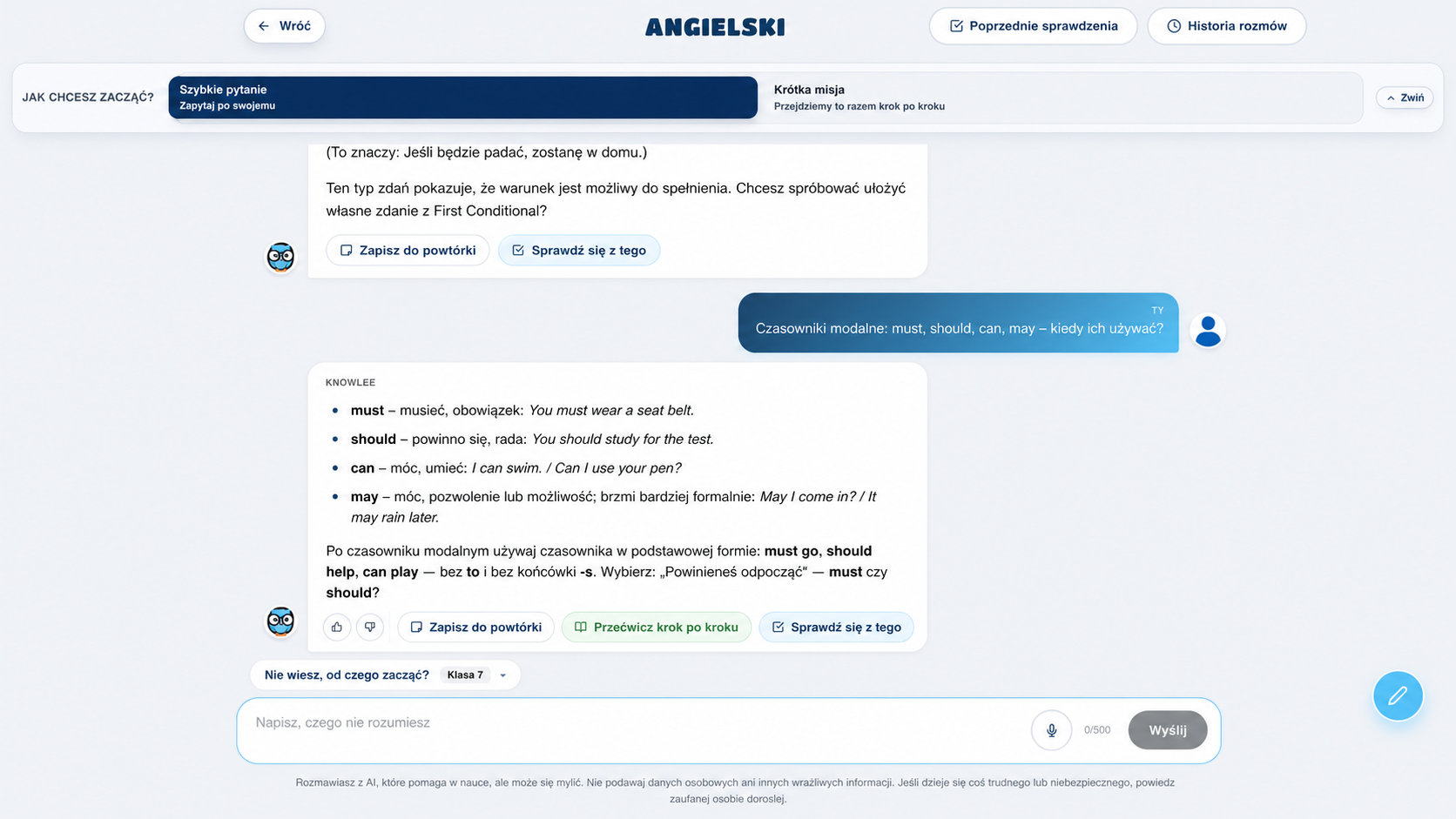
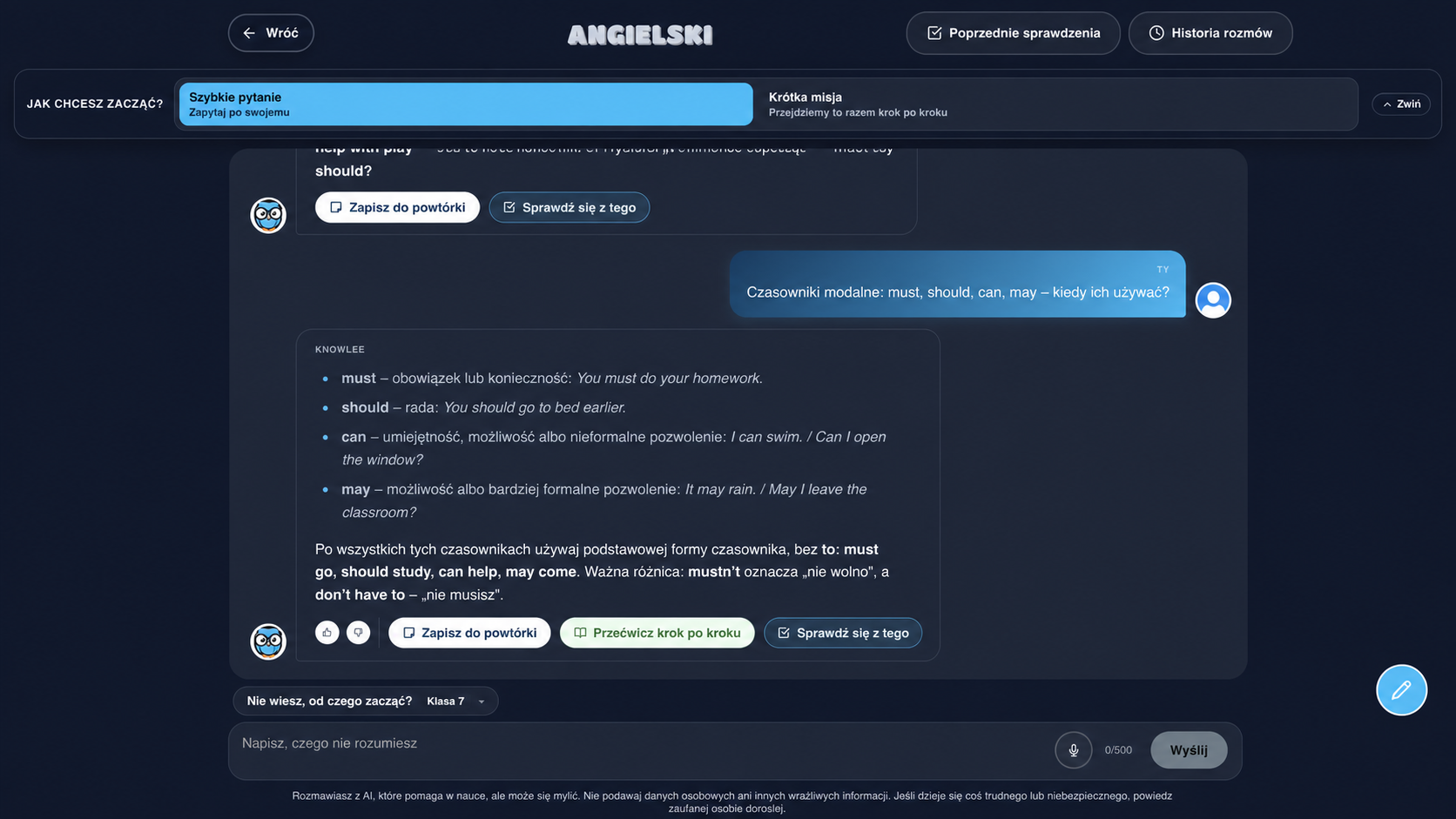
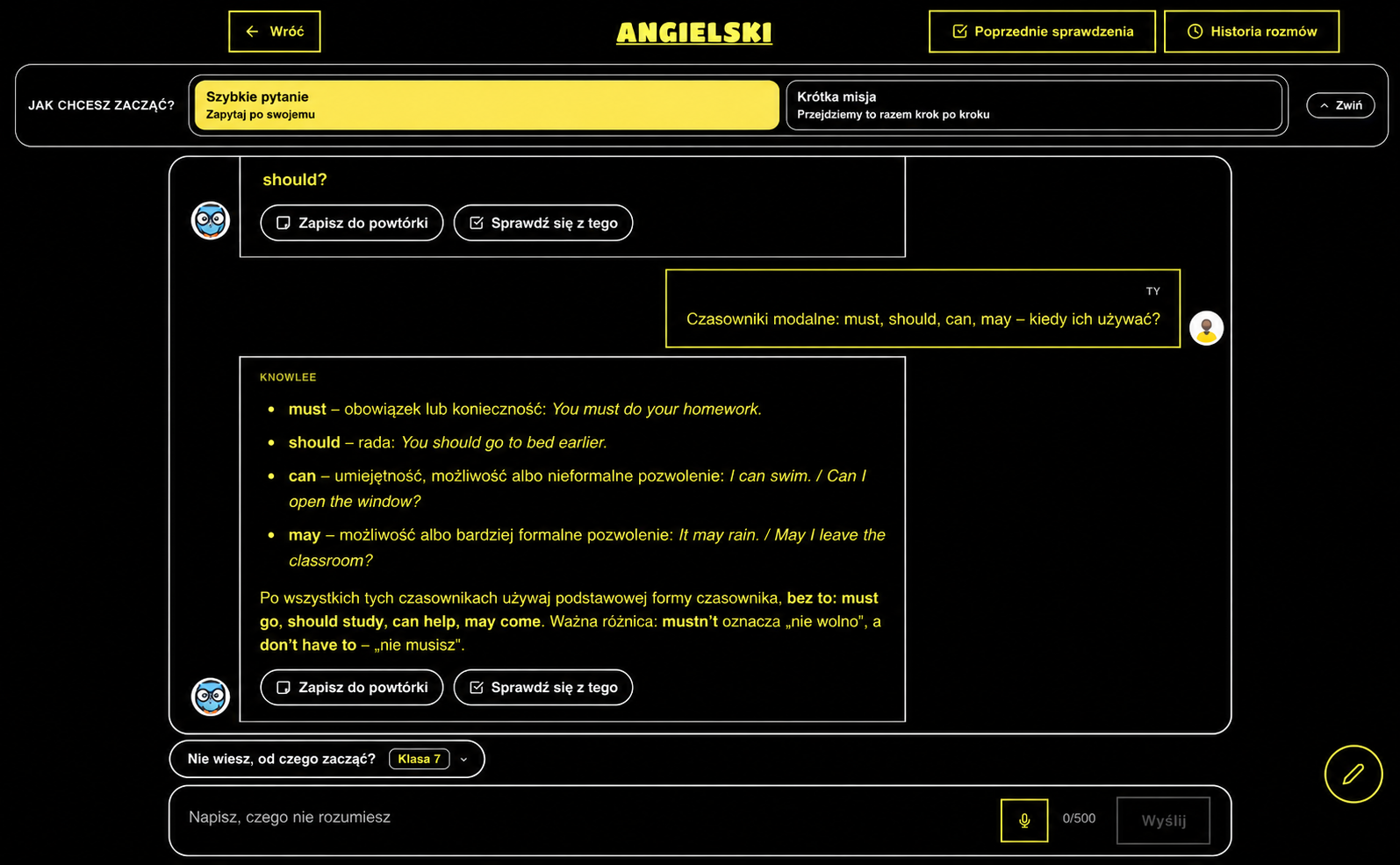
They can move a useful answer into their own note. They can also prepare a quiz from the conversation context, then review their answers and result to decide what to revise.
The quiz helps pupils check their own preparation. Knowlee is not a tool for teachers to assign school grades. Available features and materials depend on the agreed scope of testing.
School permissions do not provide general access to private tutor conversations, notes or quiz results. School administrators and project supervisors have different roles; the administrator role does not grant access to project messages.
First, we agree on the classes, coordinator, duration and scope of testing, access arrangements and data rules.
We discuss the school’s needs and the uses we want to explore.
We agree on the available features, accounts, roles and data-handling rules.
We carry out the agreed testing and discuss observations together.